


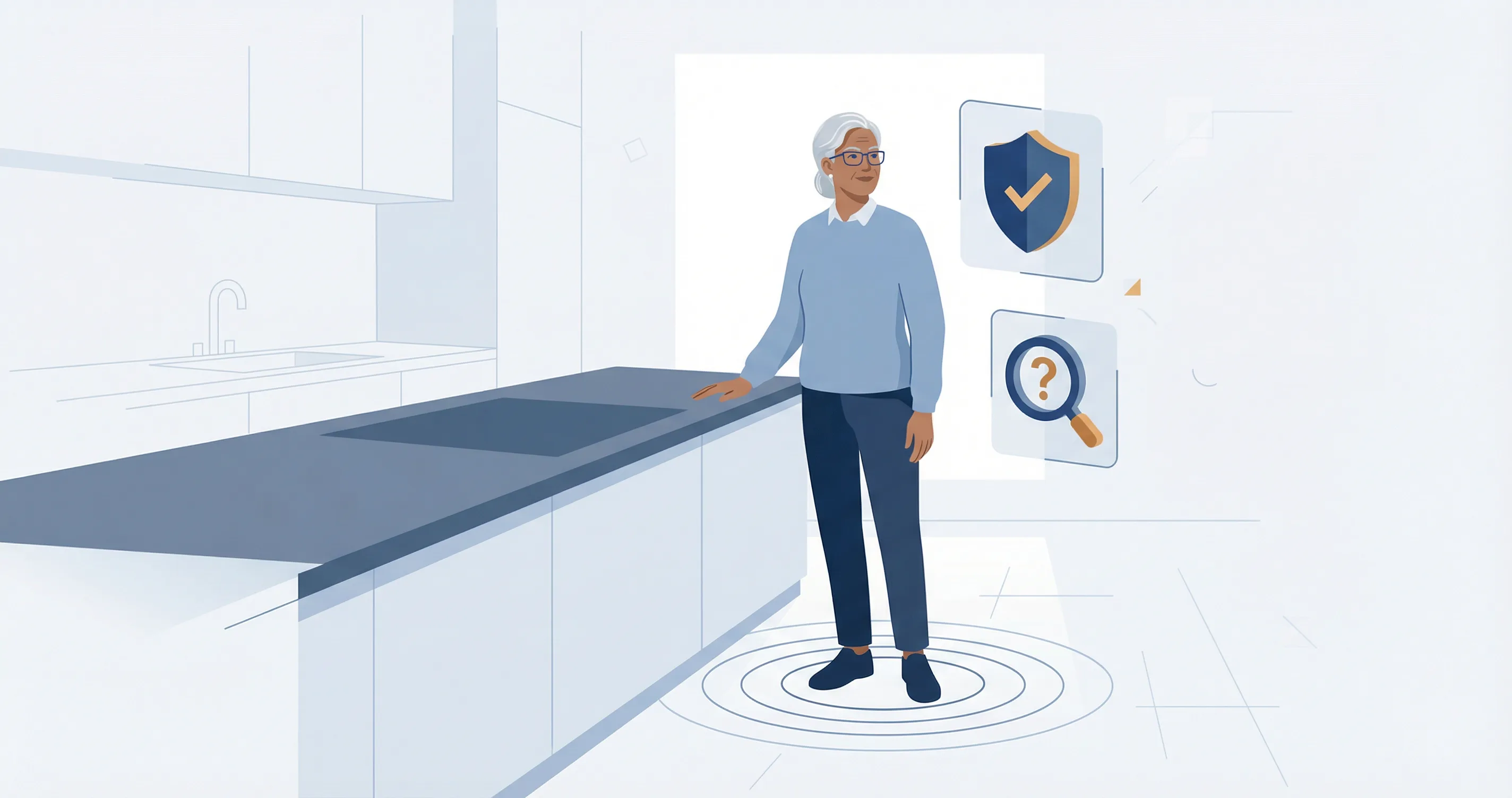
You stumble getting out of bed. You feel unsteady on the stairs. You grab a wall you didn't used to need.
Should you worry?
Sometimes, yes. Balance problems send more than 3 million older adults to the emergency room every year in the United States, and falls are the leading cause of injury-related death for people 65 and older.1 But not every wobble is a crisis. The key is knowing which changes are a normal part of aging and which ones deserve urgent attention.
This guide will help you sort one from the other.
Important: This article is for education, not medical advice. If you're experiencing sudden or severe balance symptoms right now, stop reading and call 911 or your local emergency number.
Quick Take
- Some balance decline is normal with age, but sudden or worsening changes are not.
- Call 911 immediately if balance loss comes with a spinning sensation (vertigo), face drooping, arm weakness, slurred speech, sudden severe headache, or vision loss. These could be signs of a stroke.2
- See your doctor soon if you're falling more often, feeling dizzy regularly, or avoiding activities because you're afraid of falling.
- Balance problems are common and treatable. In a Cochrane review of 108 trials, exercise programs reduced falls by about 23%.3
- A 10-second balance test can flag serious long-term health risk. Failing it has been linked to significantly higher mortality over follow-up.4
Normal Balance Changes vs. Red Flags
Balance naturally shifts as you get older. Your vision changes. Muscles lose some strength. The tiny sensors in your inner ear and feet become less sensitive. These changes happen gradually, over years, and they're manageable with training and awareness.5
What's not normal:
- Sudden changes (over hours or days, not years)
- Asymmetric problems (one side of your body much worse than the other)
- New symptoms alongside balance trouble (headache, vision loss, numbness, confusion)
- Progressive worsening (steadily getting worse over weeks despite no obvious cause)
When balance changes come on suddenly or bring other symptoms along, your body is sending a signal. Listen to it.
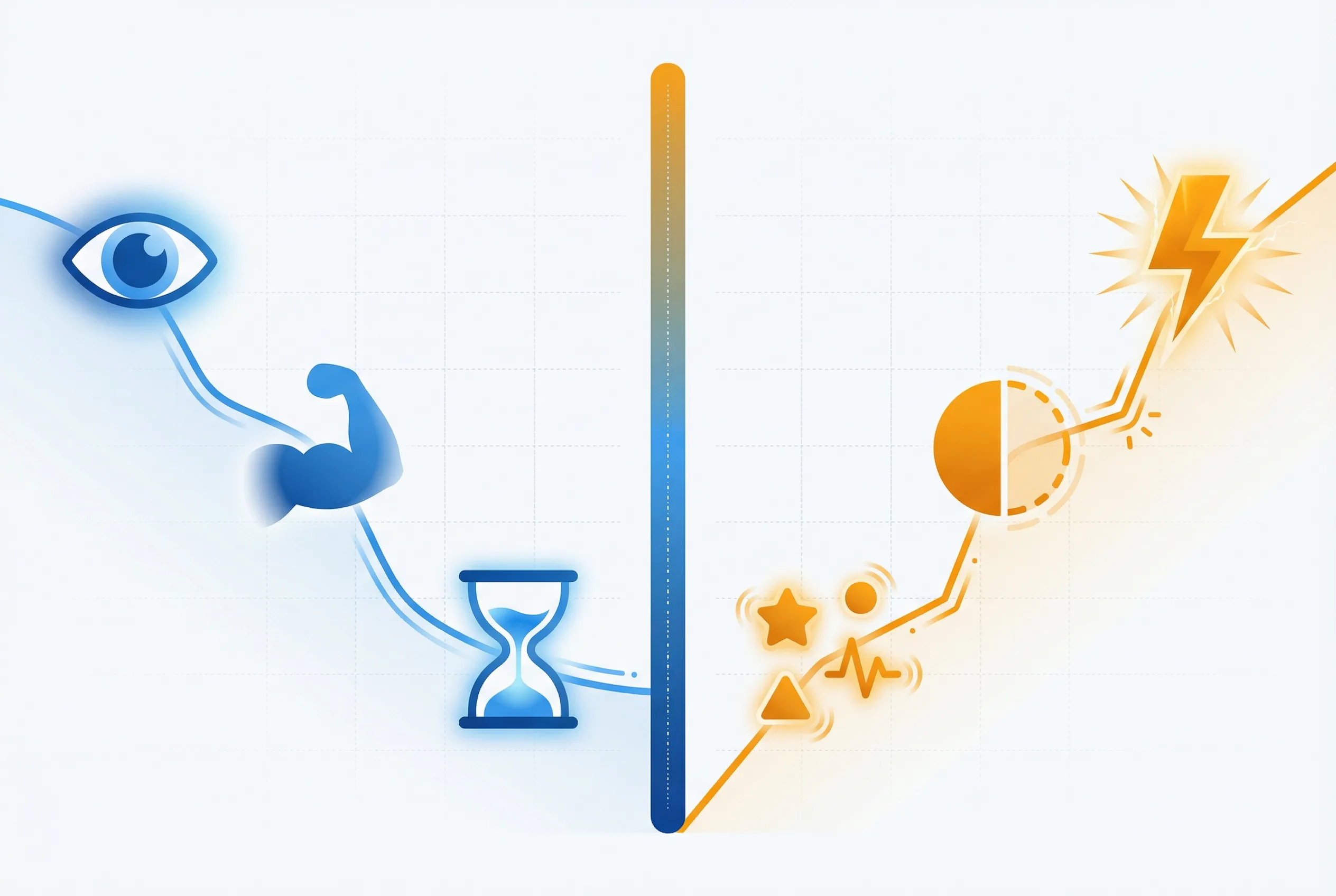
Emergency Red Flags: Call 911
Some balance problems are medical emergencies. These situations need immediate attention, not a "wait and see" approach.
Signs of a possible stroke (BE-FAST)
The expanded stroke recognition method adds balance as an explicit warning sign.2
| Letter | Sign | What to look for |
|---|---|---|
| B | Balance | Sudden loss of balance or coordination |
| E | Eyes | Sudden vision trouble in one or both eyes |
| F | Face | One side of the face droops; uneven smile |
| A | Arms | One arm weak or numb; drifts downward |
| S | Speech | Slurred or hard to understand |
| T | Time | Call 911 immediately |
During a stroke, roughly 1.9 million brain cells die every minute.2 Early treatment dramatically improves outcomes. Don't drive yourself to the hospital; call 911.
Other emergency signs with balance loss
Call 911 or go to the ER if balance problems come with any of these:
- Continuous spinning sensation (vertigo)
- Sudden severe headache (worst headache of your life)
- Loss of consciousness or fainting
- Chest pain or pressure
- Sudden numbness or weakness, especially on one side
- Sudden confusion or inability to speak clearly
- Seizure
- A fall that results in a head injury, especially if you take blood thinners
When in doubt, err on the side of calling. Emergency teams would rather respond to a cautious call than a delayed one.
Warning Signs: See Your Doctor Soon
These situations aren't typically emergencies, but they need professional attention. "Soon" means within days, not months.
1. You're falling more often
One stumble can be a fluke. But if you've fallen two or more times in the past year, that pattern is clinically significant and worth investigating.3 Tell your doctor even if you weren't hurt. Near-misses count too.
2. Recurring dizziness or vertigo
Feeling the room spin when you turn your head or lie down could point to an inner ear problem (like BPPV), low blood pressure, or a medication side effect.5 These are treatable, but they need a diagnosis first.
3. You're avoiding activities because of balance fears
Skipping walks, turning down invitations, or rearranging your life around a fear of falling is a warning sign in itself. Fear of falling can trigger a downward spiral: less activity leads to weaker muscles, which leads to worse balance, which leads to more fear.6
4. New numbness or tingling in your feet
Sensation loss in the feet (neuropathy) is one of the most common and underrecognized contributors to balance problems. It's especially prevalent in people with diabetes, but it has many other causes.5 If you notice new "pins and needles" or areas where you can't feel the floor well, bring it up.
5. Balance changes after starting a new medication
Many common medications can cause dizziness or unsteadiness, including blood pressure drugs, sedatives, antidepressants, antihistamines, and some pain medications.5 If your balance changed around the same time as a medication change, that's a clue your doctor needs to hear. (For a deeper look, see Medications That Affect Balance: A Guide.)
6. Hearing changes alongside balance problems
Your inner ear handles both hearing and balance. If you're experiencing ringing in the ears (tinnitus), ear fullness, or hearing loss along with dizziness, those symptoms together point toward a vestibular or ear-related cause.5
7. Gradual walking changes
If your steps are getting shorter, you're shuffling more, or you feel like your feet are "sticking" to the floor, mention it. Gait changes can signal neurological conditions that benefit from early treatment.7
Self-Assessment Checklist
Use this checklist as a conversation starter with your doctor. Check anything that applies to you over the past 3 months:
- I've fallen 2 or more times
- I feel unsteady when walking on uneven surfaces
- I grab furniture or walls for support more than I used to
- I feel dizzy when I stand up quickly
- I experience vertigo (the room spins)
- I've reduced activities because I'm worried about falling
- I have new numbness or tingling in my feet or legs
- My balance got worse after starting or changing a medication
- I have trouble walking in dim light or darkness
- I've noticed changes in my hearing along with balance issues
0 checks: Good sign. Keep building your balance with regular practice. 1-3 checks: Worth mentioning at your next doctor visit. 4+ checks: Schedule an appointment soon. Bring this list.
The Mortality Connection: Why Balance Matters More Than You Think
Balance isn't just about avoiding a fall today. It's a window into your overall health.
In a 2022 study of over 1,700 adults ages 51-75, those who couldn't hold a 10-second one-leg stance had an adjusted 84% higher risk of dying over the next 7 years, even after accounting for age, weight, and chronic conditions.4
That statistic isn't meant to scare you. It's meant to motivate you. Balance is trainable, and even small improvements matter.
Falls are the leading cause of injury death among adults 65 and older, and rates have climbed 41% between 2012 and 2021.1 The good news: evidence-based exercise programs can reduce falls by about 23%, with the most effective programs emphasizing balance and functional movement.3
What to Expect at a Balance Evaluation
If you do see a doctor about balance concerns, here's what typically happens so you know what to expect.7
Medical history: Your doctor will ask about when symptoms started, how often they happen, what makes them better or worse, recent medication changes, and your fall history.
Physical exam: This usually includes checking your blood pressure (sitting and standing), eye movements, hearing, sensation in your feet, muscle strength, and walking pattern.
Balance tests: Simple in-office tests like standing with feet together, one-leg stance, or the "get up and go" test (rise from a chair, walk 10 feet, turn, walk back, sit down).
Possible referrals: Depending on findings, your doctor might send you to:
- An ENT or neurologist for inner ear or nerve issues
- A cardiologist if blood pressure or heart rhythm is suspect
- A physical therapist for hands-on balance training and a home exercise program
- An eye doctor for vision changes
What You Can Do Right Now
While you're waiting for an appointment, or if you want to be proactive:
Make your home safer
- Remove loose rugs and clear floor clutter
- Add nightlights in hallways and bathrooms
- Install grab bars near the toilet and in the shower
- Keep frequently used items within easy reach
Start gentle, supported balance practice
- Stand near a counter with one hand resting on it
- Try marching in place for 30 seconds
- Practice slow side steps along the counter
- Do 3 rounds of 10-second single-leg holds (with support)
These won't fix an underlying medical issue, but they help you stay active and build confidence while you get answers. For a full beginner program, see The Complete Guide to Balance Training for Seniors.
Keep a simple log Write down when balance symptoms happen, what you were doing, and how long they lasted. This gives your doctor real data instead of vague descriptions.