


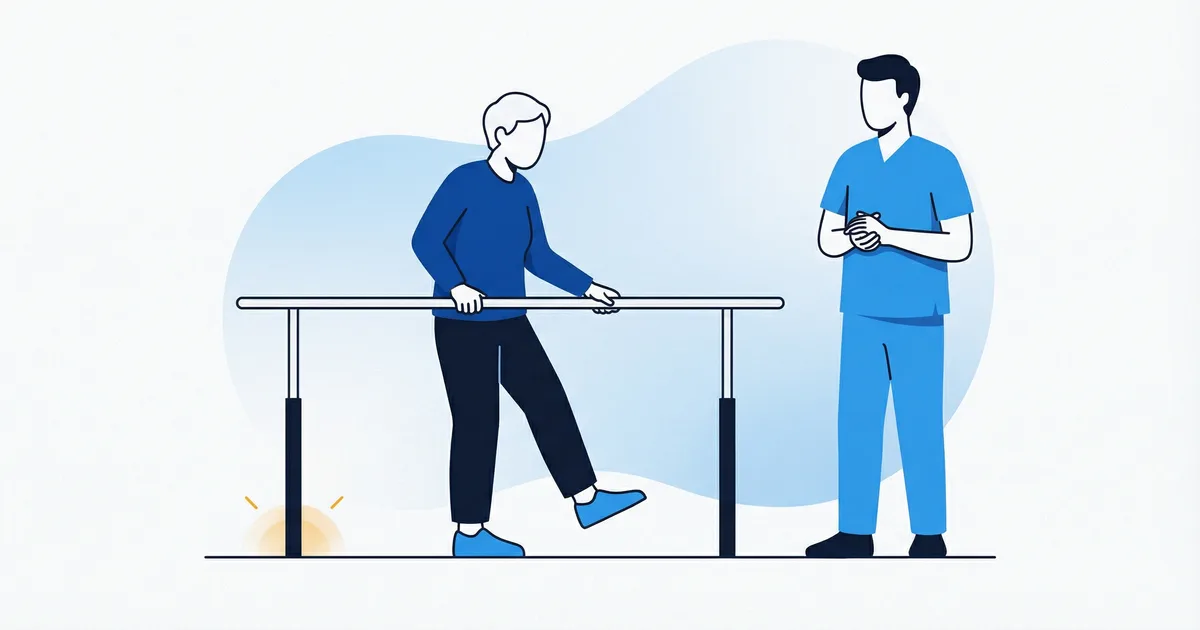
Balance problems after a stroke can be frustrating—and honestly, a little scary. If you feel wobbly, uneven, or unsure on your feet, you’re not alone: balance changes are common after stroke, and rehabilitation can help.12
The key is doing the right kind of practice safely, at the right pace, with the right support.
Important: This article is for education, not medical advice. After stroke, you should follow guidance from your clinician and rehab team (PT/OT). If anything feels unsafe, don’t push through it.
Quick Take (In Plain English)
- Why balance changes: A stroke can affect the brain systems that coordinate strength, sensation, vision, and timing—so standing and walking feel different.12
- What helps most: Consistent rehab practice that builds safer movement patterns, strength, and confidence.12
- Your job: Focus on “small and steady,” not “hard and fast.” The goal is fewer close calls—not bravery points.
Why Balance Can Change After a Stroke
Balance is teamwork between your brain, your senses, and your muscles.
After a stroke, one or more of these can be disrupted:
- Strength and timing: Muscles may be weaker on one side, or slower to react.
- Body sense (“where am I in space?”): It can be harder to feel where your foot is landing.
- Vision, coordination, and awareness: You might miss obstacles on one side or feel shaky/off-balance (“neglect” can be part of this).12
If you want the broader “how balance works” view, see: 6 Body Systems Critical for Balance.
What Rehab Usually Focuses On (And Why It Works)
Good stroke rehab is not random exercise. It’s practice that’s meant to make daily life safer and easier.2
Here are common targets in rehab programs:
1) Safer transfers and transitions
Getting up from a chair, turning, and getting in/out of bed are common “wobble moments.” Rehab helps these feel more automatic and controlled.2
2) Weight shifting and stepping practice
Real-life balance is often about recovering with a step (not standing perfectly still). Practicing controlled steps—forward, sideways, and turning—builds your “save it” skills.2
3) Strength + confidence (built together)
Hips, thighs, calves, and the core help you catch yourself and keep your body centered. Rehab builds confidence through safe, repeatable wins.2
And yes—your brain really can learn and adapt. Think: a GPS reroute, but with fewer wrong turns into the coffee table.
A Safe Way to Practice at Home (Ask Your PT First)
This is a gentle, general routine many people can do only if it’s cleared by their rehab team. If you use a cane/walker or need hands-on help, do this with supervision.
Set up your “safety rail”
- Use a kitchen counter or sturdy table you can hold with both hands.
- Clear the floor (rugs, cords, pets, clutter).
- If you feel dizzy, lightheaded, or unusually tired today, skip it.
5-minute “steady practice” routine
Do 1–2 rounds, resting as needed:
-
Sit-to-stand practice
- Stand up from a firm chair, then sit down slowly.
- Use armrests if needed.
-
Supported weight shifts
- Hold the counter.
- Gently shift weight left/right, like you’re “loading” one leg at a time.
-
Marching in place
- Hold the counter.
- Lift one knee a little, then the other—slow and controlled.
-
Side steps
- Facing the counter, step to the side and bring feet together.
- Keep it small and steady.
Stop rules (these matter)
Stop and rest if you feel:
- sharp pain,
- chest pain, severe shortness of breath, or spinning dizziness,
- new weakness or numbness,
- or you feel like you might fall even with support.
If symptoms are new or severe, contact your clinician. If you think you might be having another stroke, call emergency services immediately.3
When to Get Help (Not Later—Now)
After a stroke, it’s especially important to take sudden changes seriously.
Call emergency services right away if you notice new face drooping, arm weakness, or speech trouble (FAST), or a sudden severe headache/confusion, or a dramatic change in walking/balance.3
Those can be signs of another stroke. When in doubt, get checked.
How to Track Progress Without Obsessing
Progress after stroke is often “quiet.” It can look like:
- standing up with less effort,
- fewer grabs at the wall,
- smoother turns,
- feeling calmer when you move.
If you like structure, pick one simple marker to track each week (not each hour). Consistency beats intensity.
Where SteadyUp Fits (As a Complement)
If your clinician or PT says it’s appropriate, SteadyUp can be a helpful between-appointments tool for short, guided practice and gentle progress tracking. It’s not a substitute for stroke rehab or medical care—but it can help you build the habit: a little practice, safely, most days.
Want more general balance progressions? Start here: The Complete Guide to Balance Training for Seniors. (Use the “safety first” sections and follow your rehab team’s advice.)
Balanse publishes evidence-backed balance education. This article is educational and not a substitute for professional medical advice.